Pitch Deck Design for Cybersecurity Startups: A 2026 Guide to a Deck That Earns the CISO Meeting and the Term Sheet
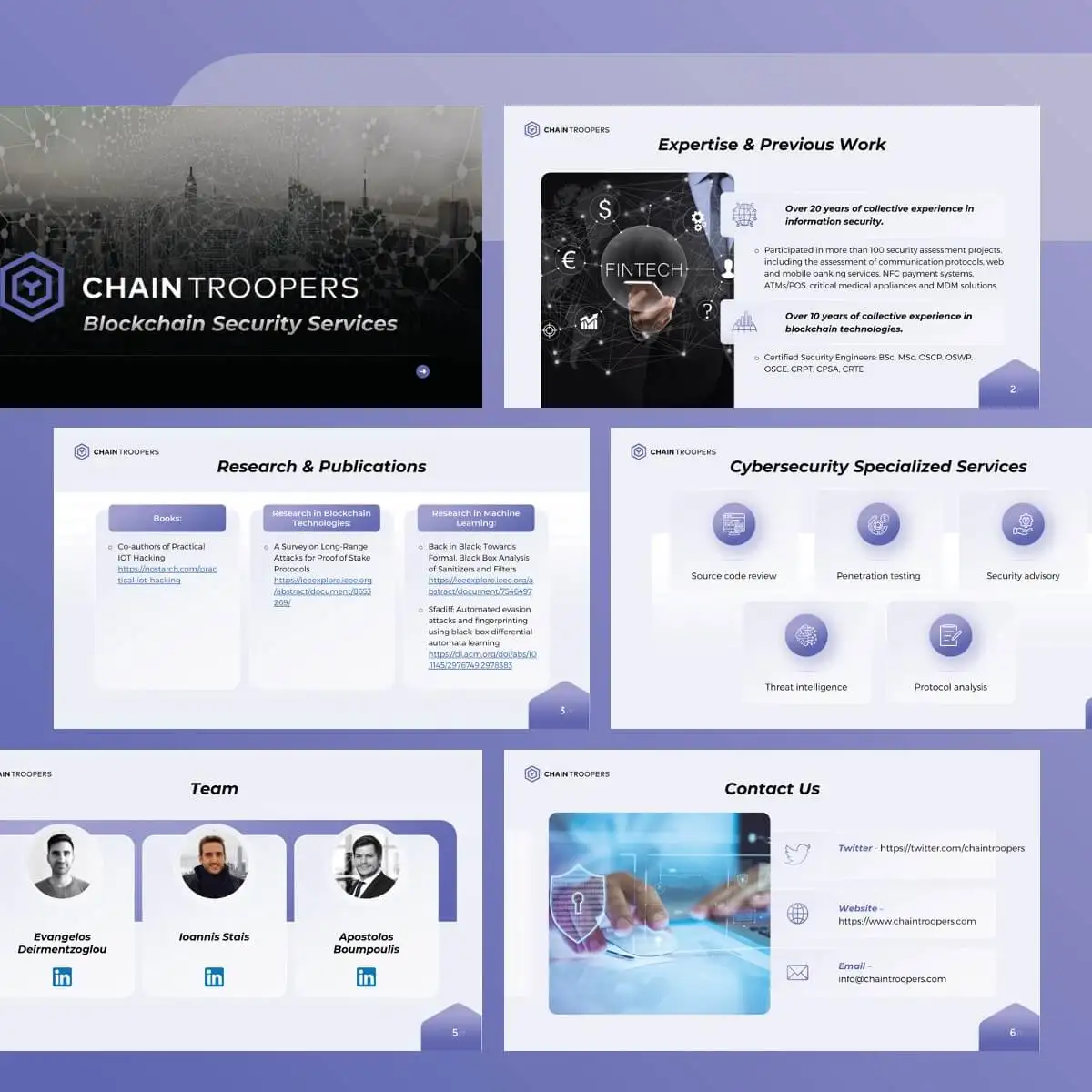
Pitch deck design for cybersecurity startups is the work of structuring and designing the investor presentation a security company uses to raise money — turning a technical product, a crowded threat landscape and a sceptical, metrics-driven buyer into a clear, credible, 12–15 slide story a VC partner can grasp in minutes. A cybersecurity deck carries a heavier burden than a typical SaaS deck: the investor is often a specialist who has seen hundreds of security pitches, is actively tired of unproven "AI-powered" claims, and mentally sorts every startup into a category — identity, cloud security, AppSec, data security, SecOps or AI security — within the first slide. If your deck buries the problem, over-explains the architecture, or simply looks like it was built in a hurry in default template slides, you lose the meeting before the product is ever evaluated. The deck's job is not to teach security; it is to make a busy, cautious partner believe this is a real category, a real team and real traction, fast.
If you are a security founder heading into a raise and your deck is a wall of diagrams, acronyms and generic template slides, it is quietly costing you first meetings — the exact moment a term sheet starts. We design investor pitch decks and brand identities for startups as a Top Rated Plus studio on Upwork — 8+ years, 3,000+ projects across 30+ countries and a 100% Job Success score — so the guidance below is what we actually tell founders, not theory. It narrows our broader pitch deck design for SaaS founders down to the specific demands of the security category, and pairs with our wider presentation design service for the data room and sales decks that follow a raise.
What makes pitch deck design for cybersecurity startups different?
A cybersecurity deck has to clear three hurdles a generic startup deck does not: a sophisticated audience, a trust-first product, and a noisy category. That changes what you put on the slides and how you design them:
- The audience is a specialist, not a generalist. Many cyber investors (and the CISOs they call to validate you) know the space deeply. They will spot hand-waving instantly, so the deck has to be precise about what you actually do and honest about what you don't.
- Trust is the product. You are selling security, so a sloppy, inconsistent deck undercuts your core promise. Design discipline is not vanity here — it is evidence that you are rigorous about everything, including the thing you sell.
- The category is crowded and fast-moving. Investors bucket you immediately (identity, cloud, AppSec, data, SecOps, AI security). The deck must place you in a clear bucket and then say why you win inside it, not pretend to be everything.
- "AI-powered" is now a red flag, not a selling point. In 2026, partners are openly sceptical of security pitches that lean on "AI" without detection accuracy or real results. If you use AI, the deck has to show the proof, not the buzzword.
- The buyer's buyer matters. Your real customer is a CISO with a budget and a queue of vendors. Decks that show CISO conversations, pilots and POC outcomes read as de-risked in a way a pure vision deck never does.
A cybersecurity pitch deck is the 12–15 slide investor presentation a security startup uses to raise capital — designed to place the company in a clear security category, prove the threat is real and urgent, show credible traction with CISOs and pilots, and make a specialist, sceptical investor trust the team and the numbers in minutes.
What slides should a cybersecurity startup pitch deck include?
A seed-to-Series-A security deck is usually 12–15 slides in a tight, logical order. The sequence below is the spine most strong cyber decks follow; the table shows each core slide, the job it does and the design approach that lands it with a specialist investor.
| Slide | Job it does | Design approach |
|---|---|---|
| Problem / threat | Make the risk feel urgent and specific, not generic FUD | One sharp statistic or scenario, a clean threat visual, no acronym soup |
| Category & "why now" | Place you in a clear security bucket and justify the timing | A simple positioning line, a landscape visual, a dated catalyst |
| Solution | Show what you do in one grasp, before the how | A single before/after or capability visual; outcomes, not architecture |
| How it works | Prove the tech is real without drowning the investor | One clean architecture diagram, labelled plainly, one layer of depth |
| Traction | De-risk with CISO interest, pilots and POC results | A clear chart or logo wall, real numbers, no vanity metrics |
| Market & business model | Show a fundable category and how you make money | A simple sizing visual and a one-line pricing model, sourced |
| Team & the ask | Prove you can build it and state what you need | Credible bios, security credentials, a specific raise and use of funds |
Order matters as much as content. Lead with the problem and the "why now", not a company origin story — a specialist investor wants to know the threat and the timing before anything else. Keep one idea per slide, and move deep technical detail (full architecture, compliance matrices, detailed benchmarks) into an appendix the investor can request. The main deck earns the meeting; the appendix survives the due diligence that follows. If you want the fuller build-the-narrative framework behind this, our guide to a pitch deck that raises money walks through the story arc in depth.
How do you show security traction credibly to investors in 2026?
Traction is where cybersecurity decks are won or lost, because the category is full of impressive-sounding claims and investors have learned to discount them. The goal is to replace adjectives with evidence. Design the traction story around proof points a sceptic can verify:
- Show CISO and buyer conversations, not just signups. Number of security-leader meetings, pilots in progress and named (or anonymised-by-sector) design partners read as far more credible than a raw user count for an enterprise security product.
- Lead with POC and pilot outcomes. A paid pilot with a written success metric — threats caught, time-to-detect reduced, alerts cut — and a simple before/after is the single most persuasive slide. One clear number beats a page of features.
- Prove the "AI" if you claim it. If detection or triage is AI-driven, show accuracy, false-positive rates or measured analyst time saved. An unsubstantiated "AI-powered" line now invites scepticism rather than excitement.
- Use the right metrics for your stage. Early on, design-partner logos, pilot conversion and retention tell the story; as you approach Series A, investors increasingly expect real recurring revenue and healthy growth and retention. Present whatever is genuinely strong, and don't dress a seed deck up as a growth-stage one.
- Make every number sourced and honest. Label timeframes, define your metrics, and never round a pilot into a "deployment". A specialist investor who catches one inflated number distrusts the whole deck — and in security, distrust is fatal.
Because the funding market in 2026 is concentrating into fewer, more scrutinised bets, capital efficiency and evidence matter more than vision alone. Confirm the latest benchmarks and your own figures before you build the slide — never paste a number you cannot defend in the meeting it earns you.
What should a cybersecurity pitch deck look like in 2026?
The visual language of a strong security deck is calm, precise and confident — the opposite of the dark, neon "hacker" aesthetic founders often reach for. The look should feel like enterprise software a Fortune 500 CISO would trust, because that is who ultimately pays you. The traits that separate a credible deck from an amateur one:
- A restrained, professional palette. One or two brand colours, plenty of space, and strong contrast. Skip the matrix-green-on-black cliché; it reads as a student project, not an enterprise vendor.
- Diagrams that clarify, not decorate. Architecture and data-flow visuals should be clean, consistently styled and labelled in plain language. One well-designed diagram can replace three dense paragraphs.
- A consistent system. The same type, grid, icon style and chart treatment on every slide. Consistency signals the operational rigour investors want to see in a security company.
- Legible data visualisation. Traction and market charts designed for instant reading — one message per chart, clear labels — not spreadsheet dumps pasted in as images.
- On-brand with your identity. The deck should match your logo, colours and site so the whole company looks like one credible entity. If that identity is weak, fix it first with a brand identity package for small businesses.
This matters more in security than almost any other category, because you are asking people to trust you with their most sensitive systems. A deck that looks improvised undercuts that pitch at a subconscious level; a deck that looks rigorous reinforces it on every slide. The same discipline that makes a strong logo design for fintech startups — restraint, trust signalling, precision — is exactly what a cybersecurity deck needs.
What are the most common cybersecurity pitch deck mistakes?
A handful of recurring mistakes sink otherwise-fundable security startups. Most are easy to fix once you know to look for them:
- Leading with the tech, not the threat. Opening on architecture before the investor cares about the problem loses the room. Earn the technical slide by making the risk urgent first.
- Acronym and jargon overload. A deck that assumes the investor knows every niche term alienates generalist partners and associates. Define the one or two terms that matter; cut the rest.
- Unsupported "AI" and buzzword claims. "AI-powered", "next-gen", "military-grade" without evidence actively lowers trust in 2026. Replace every adjective you can with a measured result.
- Vanity metrics over buyer proof. Downloads or free signups mean little for an enterprise security sale. CISO meetings, pilots and POC outcomes are the currency that matters.
- The hacker aesthetic. Dark backgrounds, neon code and skull icons read as amateur to the enterprise buyers who fund and purchase security. Design for the boardroom, not the CTF.
- Too many slides, too much per slide. A 40-slide deck with dense text signals you cannot prioritise. Tighten to a 12–15 slide main deck and push detail into an appendix.
How do you brief a designer for a cybersecurity pitch deck?
The quality of the deck depends as much on the brief as on the designer. Security products are hard to explain, so give the designer what they need to turn your expertise into a clear story in fewer rounds:
- Your category and one-line positioning. Which security bucket you sit in and the single sentence that says why you win there — this anchors the whole narrative.
- The threat and the "why now". The specific problem you solve and the dated catalyst (a new attack class, regulation or platform shift) that makes the timing right.
- Your real traction and metrics. Honest numbers — pilots, POC results, revenue, retention, design partners — and which you are allowed to show named versus anonymised.
- One clear technical explanation. A plain-language description of how it works and the single architecture diagram that matters, so the designer can simplify rather than guess.
- Your brand assets and the audience. Logo, colours, fonts and the exact investors or stage you are targeting, plus any deck you admire and why, so the design hits the right register from the first draft.
Your pitch deck is one asset in a bigger raise. The same story, visual system and credibility should carry through your website, your one-pager and the sales decks you will need once you have the money — so a customer or investor who sees your deck, then visits your site, then takes a meeting recognises one rigorous, trustworthy company at every step. If you want that done properly the first time, professional pitch deck and presentation design is exactly the work we do — 3,000+ projects across 30+ countries, with public Upwork reviews to back it up.
Frequently asked questions
How many slides should a cybersecurity startup pitch deck have?
For a seed or Series A raise, aim for a tight main deck of roughly 12 to 15 slides: problem/threat, category and why now, solution, how it works, traction, market and business model, team, and the ask. That is enough to tell a complete, credible story without overwhelming a specialist investor who is reading dozens of decks. Push deeper technical detail — full architecture, compliance matrices, detailed benchmarks, financial models — into an appendix the investor can request during due diligence. A long, dense main deck signals that you cannot prioritise, which is the opposite of what a security buyer wants to see; a disciplined 12–15 slides signals clarity and rigour. The exact count flexes with your stage and story, but if you are past about 20 main-deck slides, you are almost certainly putting appendix material in the wrong place.
What should be on the first slide of a cybersecurity pitch deck?
After a clean title slide, the first real content slide should make the threat feel urgent and specific — the problem you solve, framed so a busy investor immediately understands why it matters now. Resist opening with your company story, your architecture or a list of features. A specialist investor wants to grasp the risk and the timing before anything else, and a sharp, single statistic or a concrete attack scenario does that far better than a generic 'cybercrime is rising' line. Many strong decks also fold a one-line summary of the problem, solution, category and team into an early overview so the partner can place you instantly. The rule of thumb: in the first slide or two, the investor should be able to say which security bucket you are in and why the problem is real and pressing.
How do you design a cybersecurity pitch deck that explains complex tech simply?
Lead with outcomes, not architecture. Show what the product does for the buyer — threats caught, time-to-detect reduced, analyst hours saved — before you show how it works. When you do explain the mechanism, use a single, clean, consistently styled diagram labelled in plain language, and limit it to one layer of depth; a sceptical investor needs to believe the tech is real, not understand every component. Replace jargon and acronyms with the one or two terms that genuinely matter, and move full technical detail into an appendix for due diligence. Good pitch deck design is essentially translation: turning a founder's deep expertise into a story a non-specialist partner can follow and repeat to their colleagues after the meeting. If they cannot re-explain your product in one sentence, the deck has not done its job.
How long does it take to design a cybersecurity pitch deck?
With a clear brief and your content ready, a professionally designed investor deck typically takes around one to three weeks, including revisions. The biggest variable is not the design — it is the narrative. Security products are genuinely hard to explain, so the time goes into structuring the story, simplifying the technical slides and getting the traction numbers framed credibly, rather than into picking colours. Raises that run slow usually do so because the founder is still deciding what the deck should say, not because the designer is slow. To speed it up, come in with your category and positioning fixed, your real metrics gathered, and one plain-language explanation of how the product works. A complete package — investor deck plus a one-pager and a data-room appendix — takes longer because there are more assets to make consistent, but it leaves you ready for the whole raise, not just the first meeting.
Want this done for you?
FRPROTECH is a Top Rated Plus Upwork agency with 3,000+ projects delivered across 30+ countries. Tell us your goals and we'll handle the rest.
Written by the FRPROTECH design team. 8+ years building brands and websites for clients in 30+ countries, with a 100% Job Success Score on Upwork.