What Are Brand Guidelines? What to Include in 2026
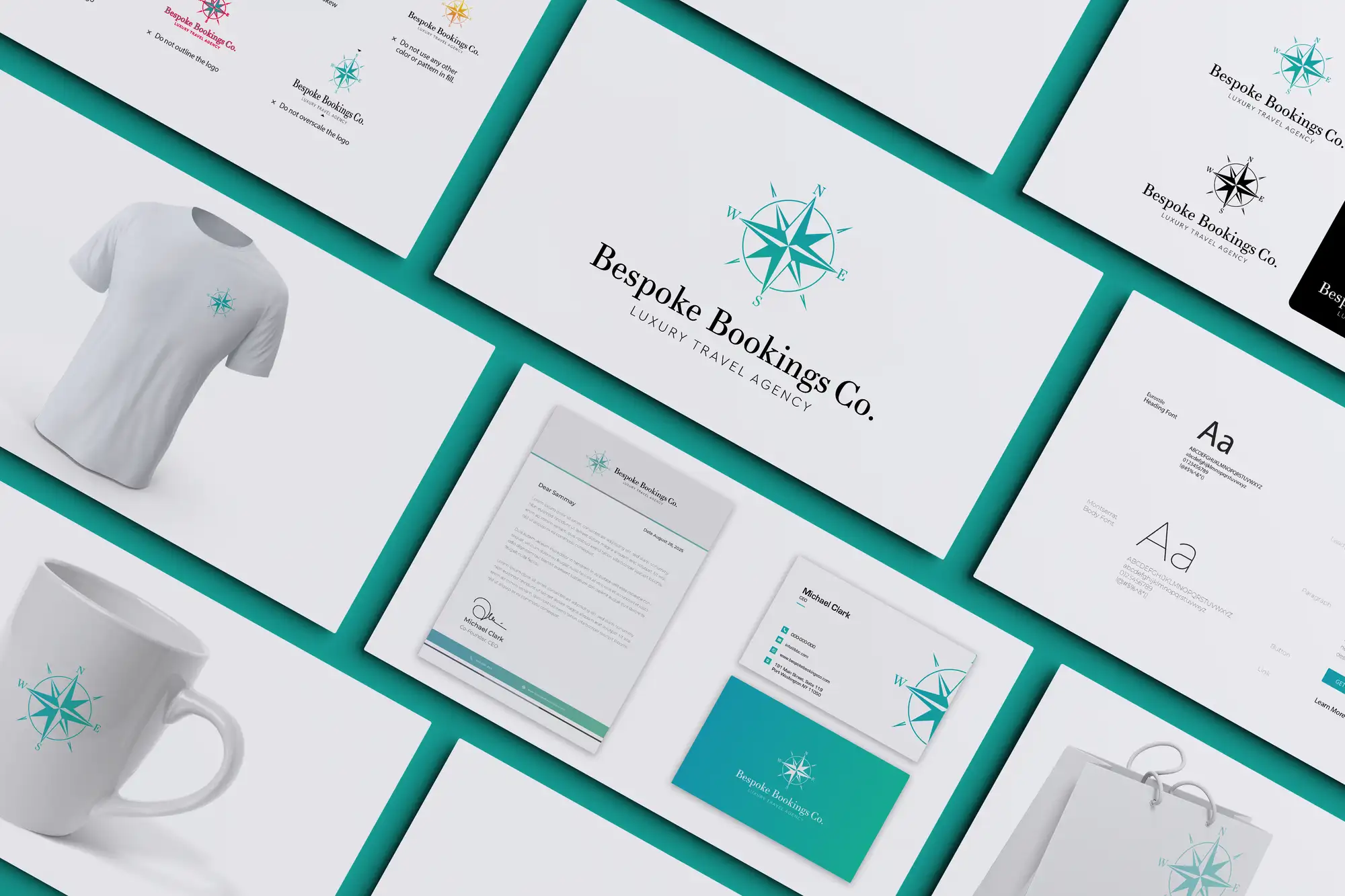
Brand guidelines are a single document that defines exactly how your brand should look, sound, and be used across every channel, so anyone, from your own team to an outside designer, applies it the same way every time. They cover the practical rules: which logo to use where, your exact colour values, your fonts and type sizes, your photography style, and how the brand should write and speak. Think of them as the operating manual for your identity. Without one, every new hire, agency, and freelancer rebuilds the brand slightly differently, and the whole thing slowly drifts out of shape. With one, your brand stays recognisable everywhere it appears, which is what turns it from a logo into an asset. In short, brand guidelines are how a brand stays consistent when more than one person is responsible for it, which, sooner than most founders expect, is always.
This guide explains what brand guidelines really are, why they matter more than most businesses realise, exactly what to include, and a practical step-by-step way to build your own. It's the same document we produce on branding and visual identity projects across 8+ years and 3,000+ projects in 30+ countries as a Top Rated Plus agency on Upwork.
Brand guidelines vs. brand strategy vs. a design system
These three get mixed up constantly, but they sit at different layers. Brand strategy is the thinking, who you're for, how you're positioned, and what you stand for. Brand guidelines are the rules that turn that strategy into a consistent look and voice. A design system goes one level deeper, into reusable interface components for product and web teams. You move from abstract to concrete as you go down the list.
| Document | What it defines | Who uses it most |
|---|---|---|
| Brand strategy | Positioning, audience, personality, message | Founders, marketers |
| Brand guidelines | Logo, colour, type, imagery, voice rules | Designers, writers, partners |
| Design system | Reusable UI components and code | Product and web teams |
The order matters. Your brand strategy should be settled first, because it tells the guidelines what the brand is meant to feel like. The guidelines then document the visual and verbal rules that express it. If you build software or a large website, a design system extends those rules into working components. Most small and growing businesses need solid brand guidelines long before they need a full design system.
Why brand guidelines matter
Guidelines feel like admin until the first time your brand appears wrong, a stretched logo on a partner's slide, an off-brand blue in an email, a social post that sounds nothing like you. The cost of inconsistency is quiet but real: your brand stops feeling deliberate, and people trust it a little less without knowing why. Here's what a good set of guidelines actually protects:
- Consistency at scale. The moment more than one person touches your brand, guidelines are what keep it recognisable instead of ten slightly different versions.
- Speed. Designers, writers, and developers stop guessing and asking, which cuts revisions and gets work out the door faster.
- Premium perception. A brand that looks the same everywhere reads as established and trustworthy, and that perception supports higher prices.
- Protection. Clear logo, colour, and spacing rules stop well-meaning people from distorting your identity in ways that are hard to undo.
- Easier handovers. New hires, agencies, and freelancers get up to speed from one document instead of absorbing the brand by osmosis.
In practice, guidelines pay for themselves the first time you onboard a new designer or brief an external partner and the work comes back on-brand without a dozen rounds of correction. That is the whole point: the brand should not depend on any one person's memory.
What to include in your brand guidelines
There's no single fixed template, but strong brand guidelines nearly always cover the same core sections. You don't need every one on day one, a small business can start lean, but the important elements below are what keep a brand consistent. Here's what to include, section by section.
1. Brand overview and story
Start with the why, a short summary of your purpose, positioning, audience, and personality, lifted from your brand strategy. This isn't filler: it tells anyone using the guidelines what the brand is trying to be, so their choices are informed rather than mechanical. A designer who understands you're "precise and premium" will make better calls than one just matching hex codes.
2. Logo usage
The logo section is the most-used part of any guidelines. Show your primary logo and any approved variations (horizontal, stacked, icon-only, one-colour). Then set the rules: minimum size, clear space around it, which backgrounds it can sit on, and, crucially, what not to do, don't stretch, recolour, add effects, or crowd it. A clear "logo don'ts" panel prevents most of the damage brands suffer in the wild.
3. Colour palette
Define your exact colours with values for every context: HEX for web, RGB for screen, CMYK for print, and Pantone if you print physical materials. Split them into primary, secondary, and accent or neutral roles, and say where each is used. Include accessibility notes on which text-and-background combinations meet contrast requirements. Our guide to choosing brand colours covers how to build a palette that works everywhere before you document it here.
4. Typography
Specify your typefaces and how to use them: which font is for headings, which for body, the weights and sizes for each level, line spacing, and a web-safe or licensed fallback. Consistency in type does more heavy lifting than people expect, it's a big part of why a brand feels "finished." See how to choose fonts for your brand for picking and pairing type before you lock the rules in.
5. Imagery, iconography, and graphic elements
Show the style of photography, illustration, icons, and any patterns or shapes that belong to the brand, with real examples of on-brand and off-brand choices. This is what stops your visuals feeling like a random stock-photo grab bag and keeps every image recognisably yours.
6. Tone of voice and messaging
The verbal half of your brand is as important as the visual, and the most commonly skipped. Define how the brand writes: its personality in words, a few dos and don'ts, and your key messages or tagline. Show before-and-after examples so writers can hear the voice, not just read an adjective. This is what keeps your website, emails, and social content sounding like one brand.
The single most useful thing you can add to any section is a clear "do and don't" pair with real examples. People remember a wrong example they can see far better than a rule they have to read. If you only improve one thing in your guidelines this quarter, add visual do/don't panels to your logo, colour, and voice sections.
Brand guidelines vs. a full brand book
You'll see the terms brand guidelines, brand style guide, and brand book used loosely. They're broadly the same idea at different depths. A one-page style guide might cover just logo, colour, and fonts, enough for a small team to stay consistent. A full brand book adds strategy, voice, imagery, and detailed application examples. Match the depth to your size and how many people touch the brand.
| Format | Best for | Typical contents |
|---|---|---|
| One-page style guide | Solo founders, early startups | Logo, colour, fonts, basic spacing |
| Standard brand guidelines | Growing businesses, small teams | The above plus imagery, voice, examples |
| Full brand book | Established brands, many partners | Strategy, voice, applications, templates |
The best format is the one people actually open. A tight, well-organised set of guidelines that everyone uses beats an exhaustive 80-page book that lives forgotten in a drive. Start at the depth your team needs now and expand it as the brand and the number of people using it grow.
How to create brand guidelines, step by step
You don't need a huge budget to produce guidelines that genuinely keep you consistent, you need your identity decisions written down clearly and organised so people can find what they need. Here's a practical order to build them.
- Settle the strategy first. Make sure your positioning, audience, and personality are agreed before you document anything, otherwise you're writing rules for a brand that isn't decided. Start from your brand strategy.
- Gather your existing assets. Collect your final logo files, exact colour values, chosen fonts and licences, and any imagery so the guidelines document reality, not guesses.
- Document the visual rules. Work through logo usage, colour, typography, and imagery, adding a clear do/don't for each. Precision here is what prevents drift later.
- Write the voice section. Capture how the brand speaks with short before-and-after examples, so writers can match the tone, not just read about it.
- Add real application examples. Show the brand applied to a few things people actually make, business cards, social posts, a landing page, an email, so the rules feel concrete.
- Make it easy to access and update. Keep it somewhere everyone can reach, note a version and date, and treat it as a living document you revise as the brand grows.
- Share and enforce it. Guidelines only work if they're used, brief every new hire, agency, and freelancer with them, and point to them when work drifts off-brand.
Guidelines are not the same as a rebrand. If your brand is sound but keeps getting applied inconsistently, you may just need to document what you already have, not redesign anything. If the identity itself feels dated or wrong, that's a different job, and we cover how to tell the difference in when to rebrand without losing customers.
Common brand guideline mistakes
Most guideline failures aren't about missing sections, they're about documents that are too vague, too bloated, or never used. These are the ones we see most often:
| Mistake | Why it hurts | Fix |
|---|---|---|
| Rules without examples | People interpret them differently | Add visual do/don't for every rule |
| Skipping tone of voice | The brand looks right but sounds off | Document voice with real examples |
| Too long to use | Nobody opens an 80-page PDF | Match depth to team size; keep it findable |
| Never updated | Guidelines drift from reality | Version it; revise as the brand evolves |
| Written but not shared | Partners never see the rules | Brief every new hire and agency with it |
The thread through all of these is use. A set of guidelines is only as valuable as how consistently it's referenced, which is why the last steps, making it accessible and actually sharing it, matter as much as the design of the document itself.
Your brand guidelines checklist
Before you call your guidelines done, run through this:
- You've included a short brand overview so users understand the why.
- Your logo section shows variations, clear space, minimum size, and don'ts.
- Your colour palette lists exact values (HEX, RGB, CMYK) and usage roles.
- Your typography defines fonts, weights, sizes, and fallbacks.
- You've documented imagery and graphic style with on/off-brand examples.
- You've captured tone of voice with real before-and-after examples.
- You've shown the brand applied to a few real materials.
- It's versioned, easy to access, and every partner is briefed with it.
Get this documented and your brand stops depending on any one person's memory, every designer, writer, and partner now works from the same rules, and your brand stays recognisable as you grow. If you'd rather have your logo system, colour, typography, and voice built and documented for you in one polished set of guidelines, our branding and visual identity service delivers exactly that, and you can see verified results on our Top Rated Plus profile on Upwork.
Frequently asked questions
What are brand guidelines in simple terms?
Brand guidelines are a single document that defines exactly how your brand should look, sound, and be used everywhere it appears. They cover the practical rules: which logo to use where, your exact colour values, your fonts and sizes, your imagery style, and how the brand should write and speak. Think of them as the operating manual for your identity. Their whole job is to keep the brand consistent when more than one person is responsible for applying it, which is why anyone, your own team or an outside designer, can pick them up and get it right.
What should brand guidelines include?
At minimum: logo usage (variations, clear space, minimum size, and what not to do), a colour palette with exact values for web and print, typography rules, and imagery style. Stronger guidelines add a short brand overview, tone-of-voice rules with real examples, and application examples showing the brand on real materials. A solo founder can start with a one-page style guide covering logo, colour, and fonts; a growing business with more people touching the brand should add imagery, voice, and examples so nothing is left to interpretation.
What's the difference between brand guidelines and a brand strategy?
Brand strategy is the thinking, your positioning, audience, personality, and what you stand for. Brand guidelines are the rules that turn that strategy into a consistent look and voice: the logo, colour, typography, imagery, and tone. Strategy comes first and tells the guidelines what the brand is meant to feel like; the guidelines then document how to express it. You need the strategy settled before the guidelines will mean anything, because otherwise you're writing rules for a brand that hasn't been decided.
Do small businesses need brand guidelines?
Yes, and earlier than most expect. The moment more than one person, or one freelancer, touches your brand, guidelines are what stop it drifting into several slightly different versions. You don't need a big brand book: a one-page style guide covering your logo, colours, and fonts is enough to keep a small team consistent, and you can expand it as you grow. The payoff shows up the first time you brief a new designer or partner and the work comes back on-brand without endless corrections.
Want this done for you?
FRPROTECH is a Top Rated Plus Upwork agency with 3,000+ projects delivered across 30+ countries. Tell us your goals and we'll handle the rest.
Written by the FRPROTECH design team. 8+ years building brands and websites for clients in 30+ countries, with a 100% Job Success Score on Upwork.